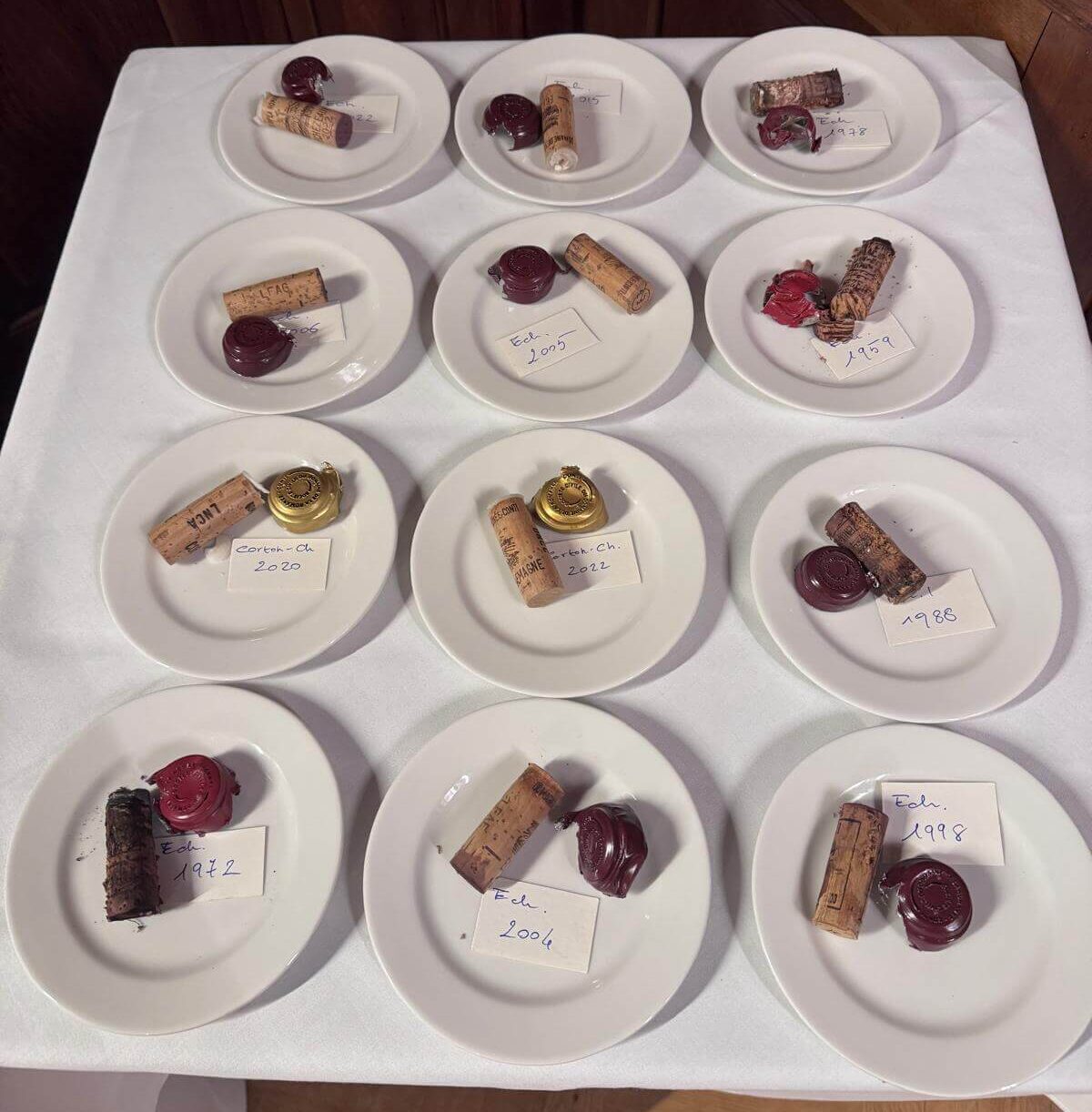
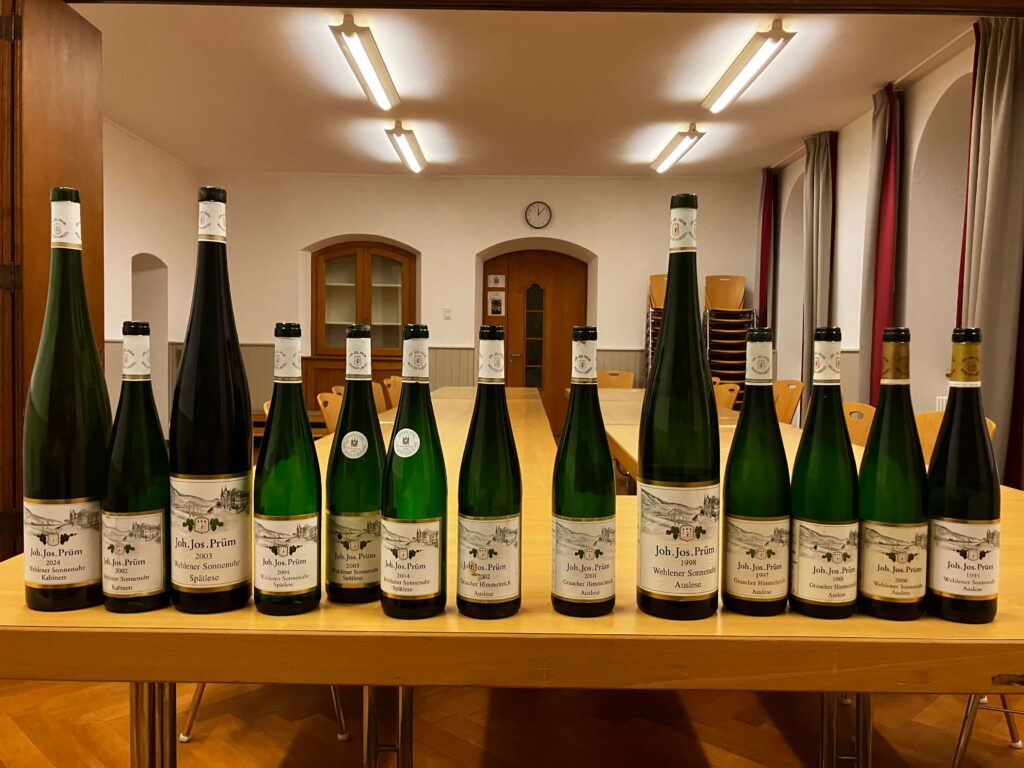
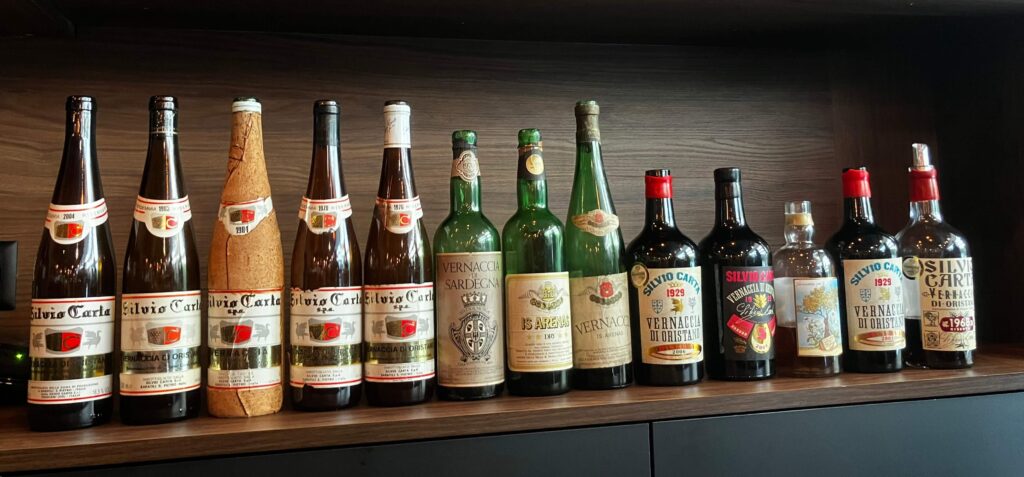
Vertical tasting on DRC Echézeaux 2022 – 1959
Few words on our DRC project…P2
Following our inaugural gathering in 2025, which sought to dissect whether « lesser vintages » truly exist at Domaine de la Romanée-Conti (DRC), my partner in crime, Jürg, and I realized that pooling our resources to establish an annual DRC retrospective was a deeply constructive project. The goal of this annual event is simple: to explore a rigorous, multi-decade vertical tasting of a single specific cru from the estate.
Historically, before the domaine expanded into the red grand crus of Corton from 2008 onwards, the first red wine served in any lineup was always the Échézeaux.
Does its position at the front of the lineup imply that it is a simpler, leaner, or less noble wine than its world-famous siblings? Not at all. Burgundy remains the definitive cradle of how the human mind interprets and delivers a pure statement of terroir.
The Échézeaux plots belonging to DRC are situated primarily within the shallower, stonier sectors of this sprawling grand cru. The rocky nature of the Les Poulaillères climate—boasting a maximum of 80 centimeters of topsoil over bedrock—and its significantly lower clay concentration compared to its immediate neighbor, Grand Échézeaux, yields a remarkably powerful, straight-backed, and vertical wine defined by chiseled, present tannins.
While some question if it is accessible in its youth, the estate has held these vines for over 150 years, forging a style and an understanding that are beautifully coherent.
In this first Act, we explore the evolution of this iconic estate through its modern history, anchoring our journey in the far-too-young 2022 vintage because, according to the family, its structural balance and climate pattern mirror the closing vintage of our path: the legendary 1959.
This symbolic circle beautifully encapsulates Aubert de Villaine’s ultimate life mission—to return DRC wines to the exact pristine beauty and « touché » they possessed before the phylloxera epidemic forced the region to graft native vines onto American rootstocks. He always held the impression that those ancestral pre-grafted wines owned a balance where age no longer mattered. It was, quite simply, like touching the eternal.
Before entering the heart of the Échézeaux vertical, the palate was primed with some remarkable wine expressions…
The Welcome: Champagne Blanc de Blancs « l’Artiste » (V11 – dég. 2017) – David Leclapart
- The Estate & Technique: Sourced from the premier cru village of Trépail on the eastern slopes of the Montagne de Reims, Leclapart is a devout champion of biodynamics. « L’Artiste » is a pure Chardonnay culled from old vines, vinified entirely without dosage or protective sulfur additions.
- Tasting Note: Shimmering lemon-gold hue. The nose is a vibrant matrix of chalk dust, white field flowers, and candied citrus peel, underpinned by a deep, savory sourdough complexity. The palate is fiercely sappy and razor-sharp. The underpinning earthy energy remains pristine nearly a decade after its disgorgement.
The program
Introduction: A white flight on Corton-Charlemagne
When American businessman Stan Kroenke acquired the historic Bonneau du Martray estate, he radically restructured its commercial strategy, ultimately signing a historic long-term lease agreement with DRC. Already established on the hill of Corton since 2008 via the Prince Florent de Mérode red plots, this 2.9-hectare loan opened an exceptional new window for the domaine. The plots sit in the prime Aloxe-Corton sector with ideal southwest-to-southeast exposures. Thanks to the sprawling, contiguous footprint originally mapped by Bonneau du Martray, DRC gained immediate access to a complete expression of Corton-Charlemagne.
This complex expression is shaped directly by the elevation and soil composition across three distinct sectors of the hill. At the top of the hill, bordering the Bois de Corton, high elevation and limestone shards inject fierce structure and limestone salinity. The mid-slope core parcels feature optimal sun exposure and thin soils, yielding ripe fruit concentration and depth. Finally, the base of the slope contains deeper colluvial clay, which effectively conveys breath and broad texture to the final blend.
Despite the debut 2019 vintage suffering from low yields, the quality instantly met the estate’s exacting standards. Fascinatingly, across both vintages tasted below, official logs show that the Corton-Charlemagne was the very last plot harvested by the domaine, while their red Corton was among the first.
This technical choice raises a compelling question: Is DRC trying to directly export its legendary Montrachet experience—defined by late pickings that occasionally court noble botrytis—onto the cold limestones of Corton?
Wine n.1 – Corton-Charlemagne 2022
A historically hot, dry year that required meticulous canopy management to prevent sunburns. Fearing too much sugar concentration and plump wines, harvest were significantly anticipated on almost all plots.
- Visual: Luminous, golden light hue.
- Nose: Unapologetically elegant and multi-dimensional. The wood integration is pristine, throwing off waves of sweet fumé, melted butter, lemon curd, and a striking undertone of crushed sea shells.
- Mouth: Ample, sumptuous, and incredibly large on the attack. It coats the mouth with notes of salted caramel, yuzu, and ripe citrus. Despite its density, it remains highly energetic, showing a smoky, marine-iodine framework.
- Finish: Possesses monumental length driven by pure gourmandise and a persistent, stoney grip.
Wine n.2 – Corton-Charlemagne 2020
A remarkably early growing season shaped by a warm spring and a brilliant summer, yielding small berries with highly concentrated juices and stable natural acidities.
- Visual: Deep, reflective golden yellow.
- Nose: Highly generous and comforting. It opens with rich aromas of panettone, candied orange peel, warm ginger spice, and a gentle overlay of blonde tobacco and caramel.
- Mouth: Broad, expansive, and deeply appeased. The texture is sleek and viscous, showing a whisper of natural fruit sweetness that is perfectly countered by a noble, phenolic chew. It feels definetely more forward and relaxed than the 2022.
- Finish: Resolves on a highly classic, intensely saline finish that leaves an echoing impression of crystallized ginger and salty sea breeze.
(Trying to) understand the terroir of Échézeaux
The name Échézeaux derives from the ancient word Chezal (small huts organized in a hamlet), historically referencing the remnants of old Gallo-Roman agglomerations. For decades, it has remained a heavily debated and non-homogeneous grand cru. Its final borders were a democratic creation forged between 1925 and the official 1936 AOC codification, expanding the original historical core to include several adjacent agricultural fields. To understand the wines of this tasting, one must separate the grand cru into two distinct (historical) sectors.
1. The Cîteaux block (a.k.a. the orginal core)
These six lieux-dits form the historic heart of the appellation, beautifully documented in the 1720 Cistercian atlas compiled by Dom Étienne Prinstet. The monks of Cîteaux recognized these specific mid-to-upper slopes as a privileged environment for viticulture, characterized by shallow soils, low clay concentrations, excellent drainage, and high rock-induced tension:
- Échezeaux du Dessus: The historical cradle. Positioned high on the mid-slope, its privileged elevation ensured maximum sun exposure and rapid drainage.
- Les Poulaillères: This specific sector anciently housed the abbey’s chicken coops (poulailler) and farmyard enclosures. Over centuries, noting its naturally stony, perfectly draining limestone profile, the monks uprooted the pens and converted the land entirely to the vine. (This is the heart of DRC’s modern ownership).
- Les Champs Traversins: Meaning « transverse fields, » this rugged, highly irregular topographical sector required intense manual leveling by the monks before it could be transformed from subsistence foraging into a functional vineyard.
- En Orveaux: Deriving from Orval (« the valley of gold »), this steep, northeast-facing small valley marks the cold northern boundary of the cru. It was originally used for grazing and gathering firewood before being terraced for vines.
- Les Rouges du Bas / Les Beaux Monts Bas: Marginal borders of the original Cistercian estate, initially farmed for cereals. The distinct red hue of the topsoil, heavily enriched with iron oxide, eventually signaled its profound compatibility with Pinot Noir.
2. The Lower and Lateral Block (destined to other agricultural / pastoral activities)
These five lieux-dits were entirely excluded from the medieval monastic core, appended later during the 1925–1936 expansion. Historically, they occupy the lower plains and depressions of the region, featuring deeper alluvial soils, higher clay content, and a history rooted in the daily subsistence farming and pastoral activities of the village of Flagey:
- Les Loächausses: Confirmed by local toponymy and historical archives of the Gros family, this humid sector historically housed the community’s beehives, essential for honey production and liturgical candle wax.
- Les Cruots (Vignes Blanches): Cruots explicitly denotes an arid, hyper-stony wasteland. Historically, vines were absent here; the land was so poor it was utilized strictly as a superficial stone quarry or left to wild goats. It was renamed « Vignes Blanches » due to the stark, reflective white color of the outcropping rocks.
- Les Treux: Derived from the Old French trous (holes/pits), this depressed, naturally damp basin at the foot of the slope was used for vegetable gardens and drainage marshes before Cistercian land reclamation.
- Clos Saint-Denis: A tiny, enclosed parcel (clos) originally belonging to the College of Saint-Denis of Vergy, a local lay ecclesiastical institution used for the direct sustenance of the village clergy.
- Les Quartiers de Nuits: Situated on the lowest flatland border, this « quartier » was a common agricultural plot subjected to strict crop rotations of grains and legumes before commercial demand pushed it into complete viticulture.
Flight 1 : Complicated harvests
Wine n.3 – Échézeaux 1972
An infamously severe, cold, and high-acid vintage across the Côte de Nuits. Disrupted by a freezing, wet spring that caused widespread flowering failure (coulure) and a sunless summer, the grapes struggled late into October to find physiological balance, resulting in highly structural, deeply savory wines. Conventional viticulture and no crop thinning. Production: 22,000 bottles.
- Visual: Deep, antique mahogany.
- Nose: Absolute aromatic liberation. It opens beautifully on notes of classic cola, rose hip jam, orange zest, and wild sweet eglantine. With air, it morphs into a deeply savory, umami-driven profile of dried plums, and dried tomato, cured meat, tea leaf, tobacco, and curry spices—(strikingly reminiscent of an old, traditional vintage of Château Rayas for some).
- Mouth: The attack is pure silk peaking on slightly grainy tannins. It feels delicate, almost fragile in its fruit density, yet it possesses immense internal elegance and ceremonial calm.
- Finish: The primary fruit has receded, allowing a noble, texturizing bitterness and an intense marine-saline and iodine kick to completely take over the finish. A triumph of structural integrity over time.
Wine n.4 – Échézeaux 2004
A notoriously generous crop following the historic heatwave of 2003. A warm spring led to massive flowering, requiring heavy green harvesting. After a disruptive summer punctuated by a severe hail episode, the vintage was miraculously saved by a flawless six-week spell of dry, luminous, north-wind conditions from August 25 until October 5. This dried out any incipient rot and exploded sugar ripeness while locking in high natural acidities. Production was restricted through severe sorting to 15,000 bottles.
- Visual: Translucent garnet with a brick rim.
- Nose: Deeply complex and wild. It displays a classic « gipsy » reduction of hot tar, black truffle, and gamey leather, which slowly evaporates to reveal sweet red berries, cooked veal stock, stewed orange, and winter sous-bois.
- Mouth: Silky, beautifully filled, and exceptionally fine-grained. The mid-palate shows a striking umami core. While it initially shows a touch of volatile lift and a slightly rustic wooden accent, these elements quickly dissipate with oxygenation. The tannins are perfectly ripe, devoid of any green or aggressive edges.
- Finish: Shows a faint, lively effervescence that keeps the dense, savory finish remarkably digestible and light on its feet. At its absolute apogee.
Flight 2: Cold to warm-swinging vintages – leading to opposite results
This flight captures the critical transition into the early 1990s—a period defined by the arrival of the renowned soil microbiologists Claude and Lydia Bourguignon. Leaving their research positions at the French National Institute for Agriculture (INRA) in 1989/1990 to establish their independent laboratory, LAMS, they delivered a series of eye-opening lectures to top Burgundy growers.
Their progress followed a distinct timeline. In 1989/1990, Claude Bourguignon founded LAMS after auditing chemical vineyard soils across France, famously stating that intensive chemical treatments left some plots with less microbial activity than the Sahara Desert. This alarming discovery caught the attention of DRC management, prompting them to eliminate systemic chemical treatments. By 1996, the estate officially implemented its first biodynamic vineyard trials, which proved so successful that they led to a 100% conversion. After 20 years of active practice the Domaine was certified in 2017.
Wine n.5 – Échézeaux 1988
A monument to classic, long-lived Burgundy. A warm spring triggered early budburst, but a cold, wet flowering severely disrupted fruit set, naturally thinning the crop. An alternating summer of sun and rain was rescued by a flawless, hot, and dry September. The small, thick-skinned berries were harvested late under pristine conditions, yielding dense, highly tannic raw musts built for decades of cellaring.
- Visual: Deep, solid garnet.
- Nose: Austere, tightly wound, and profoundly deep. It channels a cold, integer solemnity dominated by temple incense, cold slate, iron filings, and old leather.
- Mouth: Heavily structural and dense. The palate is tight and metallic, yet it reveals a round, sweet core of dark fruit tucked beneath an animal-inflected framework of sous-bois, black pepper, and cracked oyster shell.
- Finish: Exceptionally long and unyielding, driven by iron-clad, muscular tannins that are only now beginning to soften. A vintage built strictly for the cellar.
Wine n.6 – Échézeaux 1998
A highly volatile growing season shaped by global weather disruptions. While escaping the worst of the spring frosts, the summer alternated sharply between cold rains and sudden heatwaves. A wet, late-August finish required meticulous, aggressive work on the sorting table to purge unevenly ripe or sun-scorched berries.
- Visual: Hazy, brownish-garnet hue.
- Nose: Highly open, charming, and instantly expressive. It bursts from the glass with sweet red cherries, dried rose petals, warm earth, and an enticingly sweet, meaty perfume.
- Mouth: Ample, soft, and texturally velvety. The mid-palate feels a bit more chaotic and blurry compared to the laser precision of the 1988, showing a grainier tannic distribution and an extracted, earthy minerality. It is a deeply comforting, rustic, and deeply savory mouthful of Pinot Noir.
- Finish: Fully resolved, melting into a harmonious, warm finish dominated by sweet spices and cured meat. Arrived at its perfect drinking window.
Flight 3 : Young sunny vintages… »when everything went well »
This flight moves into the modern era of effortless, complete fruit maturation. Here, we witness the pinnacle of pristine grape health where early, rapid flowerings and perfectly balanced summer heat allowed the estate to harvest small, thick-skinned grapes of exceptional homogeneity without ever falling into the trap of modern over-ripeness or cooked textures.
Wine n.7 – Échézeaux 2022
An extraordinary vegetative cycle characterized by historic heat waves and prolonged drought. Amazingly, the old vines showed unparalleled resilience, drawing on deep soil water reserves. The estate openly compares the resulting balance to the legendary 1959. The Estate chose to pick early to achieve the wished balances. A perfect marriage of high quality and generous quantity that stands as a modern renaissance for the region.
- Visual: Brilliant, dense purple robe.
- Nose: Explosive and packed with youthful, creative potential. It sings with vibrant notes of fresh red raspberry, pomegranate seeds, white pepper, and wild green nettle, all framed by a high-class, French oak sweetness.
- Mouth: Tight, precise, and exceptionally dense. The attack delivers a surge of sweet, hyper-pure fruit sustained by a monumental structural grip. It feels remarkably long, generous, and packed with a resinous, youthful energy that demands patience.
- Finish: Powerfully persistent, leaving an echoing trail of primary red fruit and smoky oak tannins.
Wine n.8 – Échézeaux 2015
A benchmark vintage of legendary proportions. The growing season yielded small, perfectly compact bunches with thick skins saturated with anthocyanins and beautifully ripe tannins. An ultra-fast flowering guaranteed complete, uniform ripeness across all parcels, creating musts of unparalleled structural balance.
- Visual: Dense, muscular, deep garnet.
- Nose: Deeply rational, square, and commanding. It moves away from primary fruit to highlight a sophisticated, rich, and balsamic profile dominated by pure church incense, sweet cedar wood, and dark spices.
- Mouth: Tightly coiled, authoritative, and brilliantly sustained. The sheer quality of the juice is breathtaking, displaying an immense, velvety power and an airtight structural frame. Every element is perfectly in its place.
- Finish: Monolithic and endless. A wine structurally sculpted for eternity, showing an effortless equilibrium that will easily outlive its collectors.
Flight 4 : Contiguous sunny vintages leading to two different paths.
This flight contrasts two hot seasons: one governed by an all-consuming drought and cool northern winds (2005), and the other shaped by a chaotic, disjointed summer that required a miraculous late-autumn rescue(2006).
Wine n.9 – Échézeaux 2006
A highly unusual summer defined by extremes. July brought a bruising heatwave that temporarily blocked the vine’s vegetative cycle, followed by an exceptionally cool, rainy August that triggered early fears of botrytis. The vintage was entirely saved by a bone-dry, luminous September that allowed the vines to efficiently pump up August’s soil water reserves, exploding sugar levels by nearly two full degrees in a single week.
- Visual: Rich, shimmering ruby.
- Nose: High-toned, sweet, and highly comforting. It opens with delicate notes of warm caramel, rose hip, sweet baking spices, and a fine line of exotic incense.
- Mouth: Expansive, melting, and filled with a lovely fruit sucrosité. The texture is beautifully long, built upon a fine, granular fiber that seamlessly blends a savory, mouth-coating umami with a bright, refreshing line of natural acidity.
- Finish: Finishes on a highly elegant, deeply saline note. While it represents the « little brother » next to the legendary 2005, its superior acidity and translucent beauty make it an incredibly compelling, elegant bottle that continues to improve. 24h hours later, the wines shows its breaking point, while 2005 still keeps up at steady pace.
Wine n.10 – Échézeaux 2005
Universally heralded as an absolute titan. The entire growing season was governed by a historic, unrelenting drought combined with a dominant, cool northern wind that naturally concentrated the berries on the vine. Despite a cool, overcast August, the fruit that arrived at the sorting table over the eight days of harvest was described by the estate as the most flawless, immaculate crop seen since 1999.
- Visual: Brooding, dense dark garnet.
- Nose: Intensely dark, complex, and unyielding. It throws off heavy notes of cedar wood, resinous pine, cold smoke, and a core of fresh black olives and wild raspberry. It shows like a diamond waiting to be cut.
- Mouth: Massive, full-bodied, and deeply austere. The entry is marked by a smooth, viscous texture of colossal density. It fills every corner of the mouth with dark fruit and savory earth elements.
- Finish: Tremendously long but currently experiencing a difficult evolutionary phase; the tannins feel somewhat drying on the tip of the tongue, remaining temporarily detached from the wine’s immense core matter. A masterclass in raw power that requires further cellaring.
Flight 5 :Two iconic vintages side by side
We conclude our journey with two monumental, historic vintages that represent the absolute pinnacle of Burgundy’s post-war history. One achieved through a miraculous, late-season climatic reversal; the other a celebratory statement of natural abundance and effortless beauty that served as the ultimate psychological payback after half a century of post-phylloxera misery.
Wine n.11 – Échézeaux 1959
Harvested during the classic era of the estate, before the arrival of heavy tractors and agrochemicals. This was a vintage of natural abundance, representing the definitive rebirth of Burgundy.
- Visual: Translucent, bright brick-orange.
- Nose: Ethereal, pure, and deeply meditative. It radiates a quiet majesty centered around high-toned incense, cold wood ash, dried orange peel, and a remarkably pure, preserved core of dried red fruit.
- Mouth: While the primary fruit is concise and short, the wine remains beautifully alive. A clean, present line of fine acidity structurally supports the palate, carrying the wine entirely on its mineral bones. It slowly reveals a fascinating, bitter herbal complexity reminiscent of gentian root.
- Finish: Poised, clean, and deeply intellectual, showing an eternal stability where primary sugar has completely sublimated into structure.
Wine n.12 – Échézeaux 1978
Achieved through an extraordinary climatic turnaround. After a dreadful, cold, and damp spring that severely delayed flowering, August ushered in a flawless, sunny Indian Summer with crisp, cold nights. While the rest of the region rushed to pick on October 11, DRC waited until October 16 to maximize concentration, harvesting under clear blue skies within a single week.
- Visual: Shimmering, brilliant ruby-amber with noble clarity.
- Nose: Completely intoxicating and multi-layered. It projects a gorgeous, sweet patina of melted caramel, soft leather, old church incense, and a profound, iodine-scented sea spray breeze.
- Mouth: The definition of liquid silk. The palate is light on its feet yet incredibly dense and fine-grained, showing an absolute masterpiece in precision. It expands across the mouth with effortless grace, unveiling delicate floral elements and a deep, sweet, expanding wave of pure umami.
- Finish: Breathtakingly long, harmonious, and utterly complete. There is a natural sweetness and absolute delight on all sides. Flawless.
Conclusions
This extensive vertical tasting beautifully deconstructs the unfair myth that Échézeaux is a simple or secondary grand cru within the DRC hierarchy. Instead, it unveils a terroir of remarkable power, vertical tension, and a distinctively chiseled tannic architecture that requires time to fully reveal its inner secrets.
When evaluating the overarching evolutionary trajectory of the estate, the flights map out clear cultural and technical milestones. We witnessed the raw, structural grit of the old-school 1970s era, where the wines relied on high natural acidities to outlive the chemical exhaustion of the soils…and nonetheless they aged beautifully!
We traced the profound « awakening », where the microbiological intervention of Claude Bourguignon restored a living soul to the land. Finally, we arrived at the modern golden era of biodynamics, where vintages like 2015 and 2022 display an effortless, pristine fruit homogeneity that beautifully bridges the estate’s contemporary style back to the pre-industrial perfection of 1959.
Based on these evolutionary parameters, our tasting panel split into two distinct preferences. The first preferences favored sheer power, extraction, and pure muscle, qualities heavily defined by « square » vintages like 1988, 2005, and 2015, which demand long, patient cellaring. The competing preferences gravitated toward poised readiness, choosing wines driven entirely by silk, aromatics, and deep umami layers—exemplified by 1972, 1998, 2006.
Well…luckily there was a 1978 to « glue » the team back together 🙂
Ultimately, the most telling indicator of human appreciation was which bottles emptied first. The oldest and most texturally harmonious wines—specifically the 1978 and 1972 vintages—disappeared immediately, underscoring that structural finesse and emotional resonance leave a lasting impression.
Personal questions for the next session
Lean vintages of the past vs lean vintages from the present day. Today the wines maintain more balance and flesh. —> is it barely a matter of climate change + viticultural practices + crop thinning ?
Two nearly dream-vintages 2022 and 2015. The architecture of the wines was totally different (distribution of the fruit perception, integration of the whole bunch, integration of the oak aging). Is it due to the un-achived phenolic ripeness of 2022 ? Is it the new line to walk on during hot and drought vintages ? Or, is it a commercial choice to build wines that can be accessible immediately ?
Special thanks go to Jürg for his partnership and to the collectors whose generosity and careful storage made this retrospective possible.
The DRC adventure continues in Zürich on November 10th 2027, same place same time, in the company of, his majesty, the Richebourg.
Warm regards,
Michele