Foreword
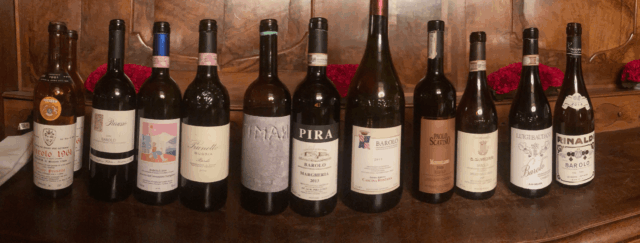
This tasting session was dedicated to the recent history of Barolo, few years before and after the introduction of the MGA in the “disciplinare”.
The officialization of the crus is a step forward towards the recognition of the single crus in the Langhe area, as much as in Burgundy.
The main differences stem from
- the cadastral nature of the MGA (cru name that can be added to the BAROLO DOCG)
- the lack of classification of the crus into e.g. 1st, 2nd, 3rd growth
- the application of the EU law of the 85-15%, therefore 15% of the blend that can come from somewhere else
- the diversity in size and homogeneity within certain MGA (see the découpage definition in Castiglione or Serralunga vs the huge areas in Monforte, leading to the need for a vineyard added mention for those who claim a more defined site specification.
The cadastral name / single cru Barolos were launched back in 1961 with the pioneering idea of Beppe Colla from Prunotto, and spread all over the appellation ever since.
The implementation of single vineyard, intrinsically relates to rarity. Some producers nonetheless decided no to adhere to this trend and always opted for the blend of several plots to obtain the best balance.
Our blind tasting brought us to face climatically perfect vintages vs challenging ones (drought or excess of rain), each time comparing single vineyards and blends, premium and ultra premium cuvées. The only target was to spend a good time and evaluate, through a small sample of 10 cuvées, if there is an impact of single vineyard denominations on quality and which other elements come into play (vineyard management, wine making techniques, etc.)
I wish you a lovely reading time and hope there will be room for more tastings on the subject in the near future.
The Program of Our Evening
Introduction – Barolo “Bussia” 1961 – Prunotto di Beppe Colla (two bottles bearing a low shoulder level)
A moment of celebration in tasting this symbolic cru, whose production was extremely limited (2700 bts)
- Deep garnet – brownish hue
- The nose was still offering some tertiary sweet fruit, fig and dates, leather and oriental spices.
- The mouth had a fresh and lively elegance, with harmonious and still vibrant tannins in a fruit velvet glove.
- In the finish a form of umami – saline length that made it even more balanced and still enjoyable.
- I believe that a better preserved bottle could still be simply stunning !
Flight 1 – 2006…warm and dry vintage marked by episodes of drought.
Wine n.1 – Barolo 2006 – Armando Parusso (Vigne di Castiglione e Monforte)
- Bright ruby
- Sweet cinnamon spice on the nose, overripe ripe cherry, blackberry, cassis, but still a youthful – fresh – crisp fun in it by a stemmy, smoky vegetal freshness. Juicy despite the lack of depth.
- Sweet fruit concentration in the mouth from the start, sandy-dusty tannin, with med acidity, med body, and a fragile medium finish.
- The structure offered by the tannin and the acidity doesn’t sustain the fruit concentration, leading to a dissociated alcohol perception.
Wine n.2 – Barolo “Rocche dell’Annunziata – Torriglione” 2006 – R. Voerzio
- Mahogany – garnet
- On the nose a sweet-charred oak bark, date, tar and lack of fruit.
- The mouth offers a dense matter, almost an over-concentration, resulting in a firm astringency (oak) + extracted tannins. The finish is medium-short and lack definition…austere.
Wine n.3 – Barolo “Bussia” 2006 – Prunotto, Antinori group
- Garnet – brown
- The nose is opened, straightforward, offering familiar Barolo typicality, with extra soy sauce, sweet dark curry spice, charred oak, coffee and chocolate.
- Mouth is elegant and fluid, with thin ripe tannins, high acidity, med+ abv, and a decent length in the finish, that remains sappy – resinous from the barrel aging. There is harmony among all components and fruit concentration. Certainly the most “rational” sample of the flight.
Flight 2 – The refined and late ripening 2013
Wine n.4 – Nebbiolo “Ciman” 2013 – Cascina Disa di Elio Sandri
- Pale ruby, garnet rim
- Refined, clean nose, on sweet spice and a decadent fruit. We could pick the classic herbal – balsamic, sunny profile of Monforte, but with a more poised and delicate fruit component (fresh strawberry).
- Extraction and red-ox are perfectly managed considering the reductive aging vessel.
- Certain tasters appreciate the harmony but still remark some heaviness in the finish due to a sort of lack of structure (acidity and tannin).
Wine n.5 – Barolo “Margheria” 2013 – Luigi Pira
- Intense ruby, brownish hue
- The nose is very expressive and opened, displaying Indian spice, tar, black tea, mint, warm earth, almost an organic character (fermented vegetable – pumpkin, Cenovis).
- The mouth offers a broad attack followed by a med-high acidity and coarse tannins.
- The tannin – bitter structure is bold due to a heavy-handed extraction, giving the impression of a lack of focus.
Wine n.6 – Barolo 2013 – Cascina Fontana di Mario Fontana
- Pale ruby
- Accessible bouquet converging on strawberry – raspberry, forest floor, truffle. According to some, pretty evolved and expressing gourmandise more than a long life ahead (see La Morra dominating the blend?)
- Light extraction, leading to a soft and meaty middle palate. The acidity is integrated and supported by a balsamic – minty freshness to sustain the whole. Refined and sapid finish.
Flight 3 – The powerful and late ripening 2008
Wine n.7 – Barolo “Bricco delle Viole” 2008 – GD Vajra
- Pale garnet
- The array is classy and accessible, on dried leaves, tobacco, cedar, macis and sweet spice, orange peel, dried cranberry, rose petals.
- Elegant and refined attack, integrated, subtle texture seating on refined tannins…silky mature finish evolving to a saline, cold maturity. Remarkable length, on umami – oregano (balsamic) in the finish.
Wine n.8 – Barolo “Monvigliero” 2008 – Paolo Scavino
- Deep ruby
- Slightly musty nose, on tar – warm tyre rubber, red cherry compote, nail polish (VA), incense, fennel – mint – verveine notes.
- The mouth is rich, polished, almost extra ripe, lacking grip and acid nerve, that remains coated in the velvety caressing mass for structural components are laid-back.
Flight 4 – The challenging and rainy 2014
Wine n.9 – Barolo “Cerretta” 2014 – L. Baudana
- Pale Ruby
- Refined and fragile nose on primary fruit, cherry and strawberry, hints of tar and rubber, potentially from reduction.
- Mouth showing little extraction, sandy elongated tannins bringing depth to the middle palate. There is a slim but integrated balance between acidity, alcohol and flavour concentration. The finish draws some extra length from limestone-marl feeling, remaining nonetheless fluid.
Wine n.10 – Barolo “Tre Tine” 2014 – G. Rinaldi
- Pale garnet
- The nose is initially reductive, vegetal ferment – smokey, opening up into orange blossom, zest, October forest leaves, saddle (leather), VA.
- Mouth initially feels diluted, with dissociated chewy tannin and firm vegetal spikes.
- After oxygenation, the perception of acidity remains upfront, but tannin structure becomes more integrated, still on a dusty texture. The flavour concentration is discrete but lifted by some volatile, helping the length in the finish.
The Dinner
- Stewed pumpkin, served on Burrata and truffle oil
- Seared Duck breast with confit red cauliflower and apple purée
Wine n.12 – Barolo “San Rocco” 2013 – Azelia in double magnum
Conclusion & Credits
A fascinating Barolo tasting, exploring the terroir diversity and how this shows according to the vintage profile. This was my aim as organiser behind the encounter.
Among the comments of the participants, an astonishment in front of the striking impact of the wine maker’s choices on the final product.
From yield management to picking time, extraction methods and aging vessels, yet again blending vs single vineyard expression.
As a result, this may lead the consumer to seek for the house style he/she appreciates and stick to it instead of choosing by plot / cru selection…which pretty much the same mechanism as when purchasing a brand.
What should the next step be to help affirm the identity of terroir over technique ?
Would a “cru classification” like in Burgundy help the cause ?
As an Italian and partly Piedmontese myself, I bet there is room for all this diversity…it’s part of its beauty !
Let’s keep discovering then, for this region is as beautiful and welcoming during the truffle season as much as when the leaves on the trees are shining green 🙂
With this last lines I wish to thank all the participants contributing to such an animated tasting, the Neumarkt team for the warm welcome and invigorating cuisine.
Not least, a special thanks to the Barolo producers…those who made the wines we tried and those of the past, cause their efforts laid the foundations for the current prosperity and liberty of expression.
Take care and be curious !
Michele