Foreword
The idea
Over the years, many friends and fellow wine lovers have shared stories of being transported to seventh heaven by so-called “lesser” Burgundy vintages from Domaine de la Romanée-Conti. I’ve had only limited opportunities to taste them myself — and rarely with any regularity (perhaps a few, like 2006, 2007, or 2008). To celebrate the tenth anniversary of Wine Rose, I thought it would be fascinating to explore this subject through mature vintages — wines between 20 and 50 years of age — to see what really lies behind the myth.
Provenance of the wines
The bottles were sourced from three private cellars, all in impeccable condition. Only one wine — La Tâche 1972 — showed signs of failure, its cork having lost elasticity and letting in air, resulting in a musty, oxidative profile.
The oxygen drama
All wines were stood upright for three days prior to opening and opened around 2 p.m. on the tasting day, with the session taking place that evening. At opening, each bottle was expressive and fragrant, with the notable exception of the 1993s, which were still tightly wrapped in their oak élevage. Both 1993s were double-decanted. Six to eight hours later, evolution was evident:
- Vosne Duvault-Blochet wines appeared more fragile, with a faint oxidative note on the 2008.
- Échezeaux 1973 weakened over time, whereas 1974 grew fuller and more harmonious.
- Richebourg 1972 revealed a reductive edge in the evening session.
I could go on for each bottle — but what struck me most was how intricate and unpredictable the act of “getting it right” can be.
The following day
Most bottles were enjoyed during the dinner that followed. The two Vosne Duvault-Blochet were retasted 30 hours after opening. Their hues had darkened, losing a bit of brilliance; a light sediment remained in suspension. Yet, texturally, they had become more fleshy and complete than the night before.
Esthetics evolution at the estate
Many key processes remained unchanged throughout the Noblet era. However, the main parameters that define the evolution of DRC’s aesthetic can be traced to a few pivotal moments:
- Since the late 1970s, the domaine adopted 100 % new oak, a shift that required major work in the vineyards to balance the resulting structure.
- Yields were drastically reduced, first through the introduction of the sorting table (1977 — though most selection had always taken place in the vineyard itself), and later in a more natural way through the massal propagation of old Romanée-Conti cuttings. This established a new, unique standard — one deeply rooted in the estate’s identity since the 16th century.
- The 1980s brought renewed viticultural methods and the gradual transition to organic and biodynamic practices, sealing the foundation of the modern DRC philosophy.
From 1945 to today, Domaine de la Romanée-Conti has continuously refined its viticulture and cellar practices, reshaping the aesthetic of its wines toward ever greater precision, clarity, and finesse, while preserving — even amplifying — their concentration, extract, and aging potential. Lower yields, refined vine selection, 100 % new oak now perfectly integrated, gentle extraction, and extensive use of whole clusters — all have contributed to a style that remains powerful yet serene, intense yet graceful, rich but never heavy. Perhaps this is the very legacy Aubert de Villaine wished to pass on to the new generation: To keep building, year after year, the impression of touching the eternal.
Thanks once again to all the participants and see you in short to deepen this wonderfully intriguing quest !
As ever,
Michele
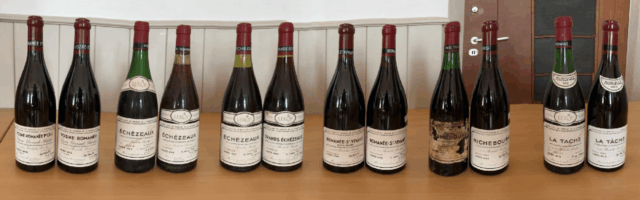
The program of our evening
The Estate had no specific informations to share about the vintage profiles before 2000. The notes here below are AI summary from Jancis Robinson website, therefore not particularly specific to DRC. The quotations after each wine come from Neil Martin, Jasper Morris and Clive Coates deep experience.
Flight 1
2008 – A cold, late year marked by heavy summer rains and persistent disease pressure. The crop was severely sorted—up to 40 % discarded—after a slow, uneven ripening saved by cool northern winds. Harvest began around September 27 under clear, drying conditions.
1999 – A generous, largely warm vintage with vigorous vines and an abundant set. After hot, dry midsummer weather, timely late-August rains refreshed the crop before intermittent showers during harvest. Picking began mid-September under mixed but mostly favorable skies.
Wine n.1 – Vosne Romanée 1er cru « cuvée Duvault Blochet » 2008
- The wine opens with a pale garnet hue, its color already showing a hint of maturity.
- The nose is refined and contemplative, unfolding in layers of rooibos, hibiscus, orange peel, gentle smoke, and sous-bois. Floral notes of pot-pourri emerge with air, lending an impression of quiet complexity and integrity. After a few hours in the glass, the aromatic profile evolves toward a more umami and tertiary expression.
- On the palate, the wine remains taut and severe, driven by a firm line of acidity and fine, sinewy tannins. The whole-bunch fermentation contributes a lifted, minty freshness and an earthy, root-like undertone that anchors the finish. It is a wine of restraint rather than amplitude, distinguished by its classical frame and purity of definition.
Shows the hallmark of the DRC style in a lighter vintage: purity, persistence, and a haunting aromatic complexity that continues to unfold in the glass.
Wine n.2 – Vosne Romanée 1er cru « cuvée Duvault Blochet » 1999
- This 1999 presents a more saturated ruby tone, its garnet rim suggesting a graceful evolution.
- The bouquet is full and generous from the outset, redolent of sweet, candied red fruit — watermelon rind, rosehip, and wild strawberry — before deepening into cooler, more meditative shades of cold ashes, incense, and sandalwood. There is an enveloping sense of warmth and ripeness, yet the overall impression remains poised and finely etched.
- On the palate, the wine displays impressive density and precision. The tannins are sappy and firm, interwoven with a fresh, mineral undercurrent that keeps the texture lively. There is a beautiful interplay between richness and restraint, the mid-palate carrying notable energy before tapering into a harmonious, medium-length finish.
The 1999 displays the sensuality and inner power typical of great Vosne, marrying generosity with classical restraint — a wine entering a beautiful plateau of maturity, where fruit, spice, and tertiary complexity intertwine.
Flight 2
1973 – A hot early season turned to prolonged rain from July through harvest, producing large crops and diluted fruit. Flowering was fine, but a wet, late autumn gave loose-knit wines of modest structure after a difficult end to the season.
1974 – A mild but erratic year with spring frosts, intermittent warmth, and a cold, wet September harvest. Periodic rain and even snow during picking limited ripeness and concentration despite a decent summer interval.
Wine n.3 – Echézeaux 1973
- The 1973 Echézeaux shows an orange-garnet tinge, the color translucent yet dignified, a testament to its age.
- The nose opens with delicate smoky notes and a gentle whiff of sandalwood, soon joined by a faint hint of struck match and cinnamon. There is definition and clarity here — a precise aromatic line — though the fruit has largely receded with time, leaving behind a noble austerity. Subtle evocations of iron, watermelon rind, and dried fig emerge as the wine breathes, lending a slightly autumnal, nostalgic quality.
- On the palate, the wine is fragile and fine-boned, its texture airy but not without intensity. The structure feels metallic, almost saline, with a firm, persistent acidity that drives the wine’s shape. The flavors echo the nose — vegetal, sappy, and linear — conveying more cerebral than sensual pleasure. It is a wine of finesse and memory, a ghost of its former vitality, yet still eloquent in its precision.
A wine whose grace lies in its transparency and restraint — a whisper of Burgundy’s past, fragile but hauntingly articulate.
Wine n.4 – Echézeaux 1974
- The 1974 Echézeaux presents a pale garnet hue, limpid and delicate at the rim.
- The bouquet is immediately charming, unfolding with sweet spice and a fine orange-floral scent reminiscent of dried rose petal — that signature Vosne perfume. Beneath, a gentle iron note and a trace of incense bring both depth and a quiet sensuality. The overall impression is one of restraint and understated elegance.
- On the palate, the wine glides with a soft, sweet touch and a velvet texture. There is an impression of warmth and gentle density, supported by a finely knit structure and good length. The finish carries a saline nuance that freshens the ensemble, leaving a lingering sense of harmony and calm.
A poised and graceful Echézeaux, defined by its perfume and purity rather than power — an eloquent expression of the domaine’s classic finesse in a modest vintage.
Flight 3
1986 – A cool winter and wet spring delayed flowering, followed by thunderstorms in late August and rain into September. Grey rot was widespread, though brief warmth at month’s end allowed sound fruit for those who harvested promptly before the final showers.
Wine n.5 – Echézeaux 1986
- The 1986 Echézeaux stands in the glass with an intense ruby hue, framed by a subtle garnet rim.
- The nose is serious and brooding, almost extracted in tone — full, meaty, and commanding, with a muscular density that speaks to the vintage’s firm backbone. Beneath the initial impression of gravitas lies a core of dark spice and savoury complexity, suggesting slow evolution rather than immediate charm.
- On the palate, the wine feels vigorous and saline, its umami character running through with a metallic edge. The structure is tight and sinewy, with a vegetal undertone that lends freshness and energy to the finish. Sappy and persistent, it closes on a note that is both savoury and refreshing — a wine of substance and tension rather than opulence.
A wine of strength and integrity, where the savoury, mineral edge defines its character as much as its fruit — classic Echézeaux in a firmly traditional mould.
Wine n.6 – Grands Echézeaux 1986
- The 1986 Grands Echézeaux shows a paler ruby colour, its garnet rim reflecting the first shades of maturity.
- The bouquet is ethereal and beautifully composed — a waft of incense and sanctuary-like scents, with hints of orange blossom, dried rose, and fine spice. The élevage feels perfectly integrated, giving a sense of seamless harmony. Beneath the surface, however, lies unexpected concentration and depth, with a quiet power that builds gradually in the glass. There is a touch of sucré richness and greater extraction compared to the Echézeaux, lending a sense of completeness and inner warmth.
- The palate is precise and velvety yet firmly structured, showing that characteristic Grands Echézeaux gravitas. Sappy and profound, the flavours unfold in waves of incense and balsamic nuance, finishing with both grace and resonance. It is a bottle that marries delicacy with substance, ethereal lift with grounded authority.
A great bottle — a study in balance and poise, where perfume, texture, and quiet concentration converge into something deeply moving.
Flight 4
1998 – A challenging season of frost, hail, oïdium, and August heat. After early September rains and localized rot, a brief dry window from the 16th to 26th allowed successful picking before bad weather returned, saving a small but healthy crop.
1989 – A mild winter and early flowering were followed by a hot, luminous summer. Late-August rains refreshed the vines, and a warm, dry September allowed an early harvest of ripe, balanced fruit under ideal skies.
Wine n.7 – Romanée St.-Vivant 1998
- The 1998 Romanée-Saint-Vivant shows a clear ruby colour with a garnet rim, its brilliance suggesting careful preservation.
- The nose opens with a faintly dusty edge and a trace of corkiness that seems to dissipate with time. Beneath this initial reticence lies an intriguing interplay of oxygenated notes — iron, metallic tones, and a suggestion of warmth — overlaying what appears to be a deep core of fruit. A touch of volatile acidity lifts the bouquet slightly, yet the overall impression remains opaque and tightly coiled at first, hinting that patience may be rewarded.
- On the palate, the wine is silky and serene, with a fine balsamic undertone that contributes to a sense of calm complexity. There is grace and harmony here, though a faint dryness marks the finish. With aeration, the wine gains depth and nuance, revealing the latent charm of Romanée-Saint-Vivant’s terroir — that seamless blend of perfume and structure that defines its soul.
A wine that begins in reserve but blossoms with time, unfolding its quiet intricacy and serene poise — an understated but contemplative Romanée-Saint-Vivant.
Wine n.8 – Romanée St.-Vivant 1989
- The 1989 Romanée-Saint-Vivant presents an intense ruby robe, still youthful in tone despite its age.
- The nose is dense and immediately engaging — spiritual and balsamic, with incense, warm spice, and a rising floral sweetness that evokes rose and peony. There is generosity and warmth here, typical of the solar 1989 vintage, yet the aromatic depth remains balanced by a fine mineral core. The impression is both caressing and substantial, a wine of layered sensuality.
- On the palate, the wine is rich and enveloping, with dense fruit and tightly knit tannins providing a firm framework. The texture is supple yet structured, the warmth of the vintage translating into a touch of dryness toward the finish. Still, the overall impression is one of confident harmony — a wine that combines opulence with a quiet, contemplative gravity.
Warm, open, and resonant — a Romanée-Saint-Vivant of generosity and depth, where the vintage’s solar character finds its most graceful expression.
Flight 5
1972 – A severe winter and cold, wet spring led to one of Burgundy’s longest growing seasons. Ripening was slow and extended into October, aided by a fine, dry autumn; harvest conditions were clear and cool, yielding sound fruit after a long wait.
Wine n.9 – Richebourg 1972
- The 1972 Richebourg shows a ruby hue shading toward orange at the rim, its appearance luminous and mature.
- The bouquet is strikingly expressive — muscular yet sweet, unfolding with oriental spice, animal fur, and a core of iron and blood. Aromas of dried meat, hot clay, and subtle game notes intertwine with an earthy gravitas, forming a bouquet of great density and remarkable persistence. Despite its age, the nose retains splendour and authority, the signature of a grand terroir in full voice.
- On the palate, the wine opens in a slightly reductive register, gradually revealing layers of mocha, sandalwood, tobacco leaf, charcoal, and a wisp of whisky spice. The tannins are ripe and silky, lending structure and finesse to the wine’s generous core. It combines substance and grace in equal measure — a fully mature Richebourg that still speaks eloquently of its power and nobility.
A wine of remarkable presence and complexity — still muscular, yet carrying its maturity with elegance and quiet authority.
Wine n.11 – La Tâche 1972
- The 1972 La Tâche presents a dull ruby-garnet robe, its appearance hinting at fatigue.
- The nose opens with an old-cellar scent — musty, damp, and devoid of vitality. There is no discernible bouquet, only traces of wet cork and a tired, oxidative tone that suggest the wine has long passed its prime.
- On the palate, oxidation dominates. The texture feels soapy and coarse, the flavours hollowed by age and taint. Any vestige of La Tâche’s former grandeur has faded, leaving only a harsh, unresolved impression. It is a bottle that speaks more to time’s fragility than to the vineyard’s greatness.
Flight 6
1993 – Spring and early summer brought mildew and hail, then a dry, sunny August thickened skins and restored balance. September’s mixed weather required careful harvest timing between full ripeness and the threat of renewed rain.
Wine n.10 – Richebourg 1993
- The 1993 Richebourg shows a deep ruby colour of notable intensity, a visual testament to the extraction and structure characteristic of the vintage.
- The nose remains marked by oak — resinous, smoky, with a faint scent of cedar and varnish — while the fruit lies hidden, still imprisoned behind the wine’s formidable frame. The élevage remains perceptible, the wine offering a stern, muscular profile that speaks more of structure than seduction at this stage.
- The palate confirms this impression: dense and firmly built, with high acidity and pronounced grip. Notes of dark fruit, tea leaf, earth, and hoisin sauce emerge with time in the glass, hinting at the complexity beneath the surface. Yet the oak is not fully resolved, lending a resinous edge that overshadows the wine’s natural detail. It is powerful and complete, but the question lingers: was it worth extracting so much? Despite the lack of oak integration, the underlying architecture is excellent, with verve and tension carrying the finish. The rustic, earthy character — so typical of DRC’s 1993s — is unmistakable, and perhaps divisive.
A Richebourg of depth and intensity, yet its strength borders on severity — a controversial wine that mirrors the challenges and ambitions of its vintage.
Wine n.12 – La Tâche 1993
- The 1993 La Tâche presents a rich ruby robe, vibrant yet still youthfully opaque.
- The nose remains tightly closed, offering little beyond faint hints of green pepper, toast, and charred wood. There is the promise of depth — a rich and complex core still locked within — but the wine resists expression, retaining a resinous character from its élevage that has not yet fully integrated.
- On the palate, a different picture begins to form. Though still reticent aromatically, the texture is supple and layered, suggesting latent complexity and precision. Cooked red cherry, sweet spice, and a touch of smoke appear gradually as the wine breathes. Unfortunately, this particular bottle shows some fragility, with a slightly tired tone that dulls the expression. Nonetheless, the structural harmony remains, and one can imagine this wine — in optimal condition — offering a noble, tightly coiled expression of La Tâche’s grandeur.
Still in chrysalis — its potential immense but withheld, awaiting the patience and air that might one day unlock its serene depth.
Bonus track – Echézeaux 1982
- The 1982 Echézeaux shows a radiant orange-garnet tint, luminous and mature.
- The bouquet is immediately beguiling — sweet, floral, and perfumed with rose petal, orange blossom, and dried flowers. There is a gentle, silken grace to the aromatics, combining delicacy with quiet depth.
- On the palate, the texture is velvet-like, coating the mouth with refined, caressing tannins. The balance is impeccable — all finesse, poise, and understated richness. The wine is at its apogee, expressing the full charm of mature Burgundy: fragrant, harmonious, and effortlessly elegant.
A perfectly poised Echézeaux at its peak — all charm, perfume, and silken grace, a portrait of mature Burgundy at its most refined.
The dinner that followed
Mushroom soup (horns of plenty…with some potatoes and a dash of cream)
Quiche selection
– Lorraine…la classique
– Cabbage…the veggie
– Snails ragout…the regional pairing